Sweetpotato Nutrition
Don’t let their sweet nature fool you! Sweetpotato nutrition is off the charts, making sweetpotatoes a wholesome option for children, adults, diabetics and anyone interested in improving their health.
Today, sweetpotatoes are used in cuisines all over the world as a satisfying and versatile vegetable with a well-earned reputation for nutrition. Many are surprised to find that a medium sweetpotato is about 100 calories when baked in the skin, making sweetpotatoes an ideal food for weight management.
Sweetpotatoes carbs may have a bad rep, but these taters are made of complex carbohydrates (a.k.a. energy) which are released at a steady pace for a constant source of vitality (source).
1 https://www.everydayhealth.com/type-2-diabetes/diet/top-health-benefits-sweet-potatoes-diabetics/
2 https://www.livescience.com/46016-sweet-potato-nutrition.html
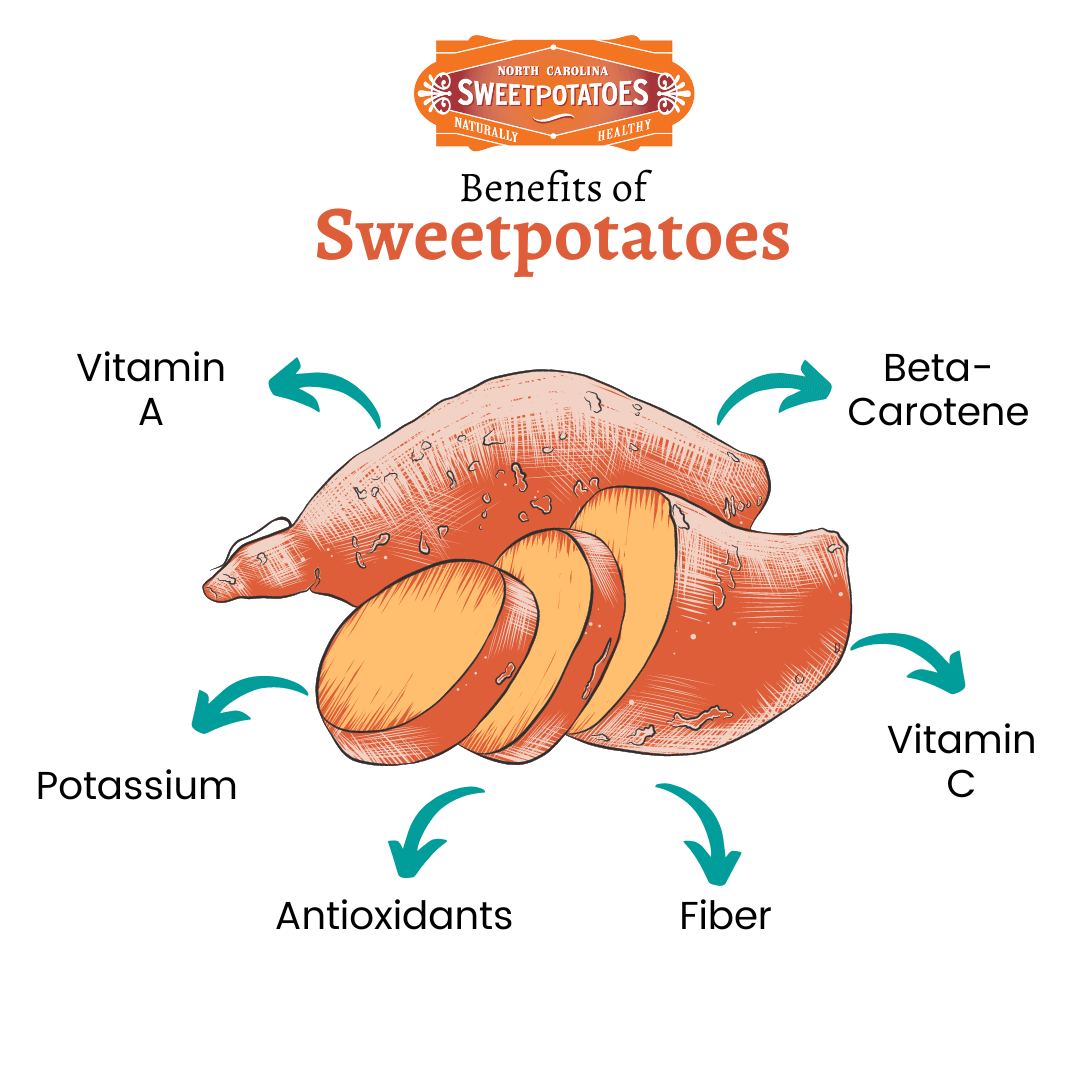
We all love the sugary, caramelized flavor of sweetpotatoes, but the benefits of sweetpotatoes are what make this spud spectacular! Behind their colorful interior, sweetpotatoes are chock full of nutrients from which you can easily benefit when prepared properly.
Benefits of Sweetpotatoes:
1. Sweetpotatoes are full of Vitamin A
When eaten with the skin on, one medium sweetpotato contains over 100% of the recommended daily amount of vitamin A, which plays a role in vision, bone development and immune function. For maximum absorption of vitamin A, be sure to pair your sweetpotato with foods that contain some fat – such as a pat of butter or avocado. Sources – NCBI: Role of Vitamin A in the Immune System; Science Direct: Carotenoids and β-carotene in orange fleshed sweetpotato: A possible solution to vitamin A deficiency
2. Sweetpotatoes are a good source of fiber
This can contribute to feelings of satiety, or feeling “full” and can aid in digestion, by helping to help keep you regular. Diets containing fiber, such as some vegetables and fruits, may reduce the risk of heart disease, and some types of cancer (a disease associated with many factors). A medium sweetpotato baked in its skin has 4 grams of fiber, more than a packet of instant oatmeal. Sources – Nutritionfacts.org: Where Do You Get Your Fiber? ; Science Direct: Individual differences in the interoceptive states of hunger, fullness and thirst.
3. Sweetpotatoes are a good source of potassium
Diets containing foods that are a good source of potassium and that are low in sodium may reduce the risk of high blood pressure and stroke. Source – Nutrition facts.org: 98% of American Diets Potassium-Deficient.
4. Sweetpotatoes contain complex carbohydrates
Complex carbohydrates are released at a steady pace for a constant source of energy, so no sugar highs or lows to worry about. Source – American Heart Association, Inc.: Carbohydrates
5. Sweetpotatoes offer a variety of nutrients
A medium sweetpotato (approximately 2 inches in diameter and 5 inches in length) contains about 100 calories when baked in the skin. Source – USDA: Basic Report: 11508, Sweetpotato, cooked, baked in skin, flesh, without salt
For the complete nutritional analysis of a medium sweetpotato, baked in its skin, visit the USDA website.

There is a great deal of confusion about whether or not people with diabetes can include sweetpotatoes in their diet. Before including any foods in to your diabetic eating plan, consult your healthcare professional. Here is what we know:

One medium sweetpotato contains roughly 100 calories and virtually no fat – a win for diabetics.
Sweetpotatoes have a lower glycemic index than white potatoes – another win for diabetics.
Research has found these root veggies may play a role in stabilizing or lowering blood sugar, due to their low glycemic index. Foods low on the glycemic index break down more slowly in the body, which may produce fewer fluctuations in blood glucose and insulin levels (source).

Here are a few diabetic sweetpotato recipes to try!
Visit our recipe page for more!
Sweetpotato Nutrition Facts
If you’re looking for a versatile, nutritious food or ingredient, you don’t have to look much further than the sweetpotato. Since being cultivated in the southern states in the 16th century, they have become a staple in many cuisines. The Center for Science in the Public Interest (CSPI) lists sweetpotatoes as the healthiest food, and for good reason. One medium sweetpotato provides about 100 calories, with 2 grams of protein, 25 grams of carbohydrates and 4 grams of fiber. Sweet potatoes provide a balance of nutrients, are absent of saturated fat and cholesterol, and are high in vitamins, minerals, antioxidants and fiber.
While sweetpotatoes are predominantly made up of carbohydrates, the fiber and protein help balance the carbohydrates, making sweetpotatoes a healthy complex carbohydrate option for all, including those with diabetes. Sweetpotatoes also have a moderate glycemic index, depending upon how they are prepared. This means in some instances they may help stabilize blood sugars. (Source)
Furthermore, sweetpotatoes have a myriad of health-promoting antioxidants, like Vitamins A and C, with one medium sweetpotato providing 120% and 30% of the daily values, respectively. Antioxidants have many health benefits, ranging from preventing diseases to enhancing athletic recovery. Specifically, sweetpotatoes offer ample beta-carotene, an antioxidant that serves as a precursor for Vitamin A. Vitamin A plays a role in immunity, skin health and eye health. You won’t have to worry about meeting your Vitamin A intake if you’re a sweetpotato lover, as a medium sweetpotato provides more than your daily needs.
Vitamin C is a water-soluble antioxidant that helps slow and prevent cell damage caused from oxidants, or stressors in the environment. Vitamin C is also important for skin and joint health, immunity, and aids in the absorption of iron. So, sweet potatoes are also a great addition to a vegetarian or vegan meal that can help enhance the absorption of iron. With their fiber and ample micronutrients, they are a balanced choice that compliment many vegetarian protein sources.
Sweetpotatoes are also great food sources of several micronutrients that help keep our bodies functioning normally. One sweetpotato offers 440 mg potassium, 70 mg of sodium, 54 mg magnesium, and small amounts of manganese, copper, and B-vitamins. Sweetpotatoes also contain fiber, a nutrient that 97% of Americans don’t get enough of (Source). The daily fiber recommendation is 25-38 grams per day for most adults. One sweetpotato offers nearly 20% of that recommendation.

Carbohydrates and Running (The Research)
While it’s apparent that sweetpotatoes are a health-promoting food, they are also an ideal choice for athletes. Exercise is dependent upon multiple energy systems working together in the body, the amount of energy available for our bodies to use and training adaptations we make. Of those energy systems, carbohydrates are the body’s most efficient energy source for exercise. Carbohydrates like sweetpotatoes provide instant fuel for the brain and central nervous system as well as for muscle contractions.
While runners love their carbohydrates, there are two different types of carbohydrates: simple and complex. Both are important for runners at different times. Generally speaking, the closer to exercise you are eating, the smaller the snack and the simpler the source of carbohydrate is needed. This is because it will be turned to glucose (energy) quicker in the bloodstream to be burned for energy. However, when eating hours in advance of competition, complex carbohydrates will be more useful, as they will take longer to break down and digest to be used for energy.
We consume carbohydrates (strands of sugars including glucose, fructose, and/or galactose) through foods, like sweetpotatoes, that we can use immediately for energy or store for later in the liver and muscles. The carbohydrates we eat and store both contribute to our body’s available energy, the amount of energy intake in relation to the energy costs of exercise. For longer distance athletic events, it’s important to have sufficient available energy to sustain activity.
The carbohydrate stores we save for later are known as glycogen. In addition to fat stores, which are essentially unlimited, glycogen stores are what we tap into during longer distance endurance activities, so are therefore extremely valuable and crucial for distance runners. Having adequate glycogen stores will also prevent the body from breaking down protein and muscle to be used as energy. Compared to fat stores, carbohydrates offer advantages as a fuel substrate because they provide a greater yield of ATP (energy) per volume of oxygen that can improve exercise efficiency (Source).
Research has shown that the performance of prolonged intermittent high-intensity exercise, such as running and racing, is enhanced by strategies that promote and maintain sufficient carbohydrate stores and availability. Without adequate carbohydrate consumption, replenishment and storage, runners and athletes alike may run out of fuel for exercise, more commonly known as “hitting the wall.” Many long-distance runners may be familiar with this feeling of fatigue, impaired concentration and increased perception of effort, due to the low blood sugar that can be experienced if the body runs out of fuel (Source). Since carbohydrates are the main fuel source responsible for balancing and maintaining our blood sugar during exercise, the body and brain suffer when the balance runs low. Hence, carbohydrate intake before, during and after exercise is important for the building, storing and replenishment of fuel stores.
Carbohydrates also help improve our immune systems. Heavy training and endurance exercise are forms of physical stress on the body that can lead to a depressed immune system. Consuming adequate carbohydrates before, during and after long training sessions can reduce the immune-suppressing effect of exercise on immune function (Source). Consistently including nutrient-dense carbohydrate rich foods, like sweetpotatoes, can assist with immunity and can improve the body’s stress response and recovery after long and intense training cycles.
Aside from carbohydrates, the micronutrient distribution in sweetpotatoes also offer advantageous health benefits to runners. Antioxidant-rich Vitamins A and C help with immunity, as well as with neutralizing oxidants produced by the stress of running and exercise. While there haven’t been many research studies done with sweetpotatoes and runners, one early study found that subjects consuming a high-polyphenol diet of purple sweetpotato leaves for seven days improved antioxidant status and decreased exercise-induced oxidative damage compared to those who didn’t after running for one hour (Source).
Furthermore, sweet potatoes offer adequate potassium, magnesium and manganese, electrolytes that are often lost through sweat and exercise. These electrolytes help with muscle contraction, maintaining a normal blood pressure and blood sugar, and regulating fluid and mineral balance in cells, all of which are important for long endurance exercise.
The proportion of carbohydrates in sweetpotatoes, as well as the wide range of micronutrients and electrolytes, make sweetpotatoes the ideal food for runners.
Incorporating Sweetpotatoes In Pre And Post-Exercise Meals and Snacks

Sweetpotatoes are quite versatile and can act as ideal pre-run and post-run fueling options. Not only are they easy to enjoy on their own, they can be deliciously paired with other foods and ingredients.
We know that carbohydrate intake before, during and after exercise is important for building, storing and replenishing fuel stores. Since sweetpotatoes are made predominantly of complex carbohydrates, they are a great pre-run meal option because they take longer to digest and be used for energy. This is great for runners who have a few hours before a run or race. Including sweetpotatoes in your pre-run meal or snack hours before activity will allow ample time for digestion and help minimize stomach and GI disturbances. Some examples of sweetpotato snacks a couple of hours before exercise include Pre-Run Sweetpotato Energy Cookies, Sweetpotato Baked Oatmeal, and Sweetpotato Coconut Ginger Energy Bites. All provide sufficient carbohydrates, as well as several micronutrients and electrolytes.
How much to include? Research has found that 1-4 g/kg of body weight of carbohydrates in the pre-event meal, hours before exercise, has been shown to continue to increase body glycogen stores and enhance endurance or performance of prolonged exercise. For example, a 150 lb. person (68 kg), would need between 68 and 272 grams of carbohydrates before exercise. Sweetpotatoes are ideal with their moderate glycemic index, which may produce a more sustained carbohydrate release during exercise, resulting in more prolonged energy (Source).
To further optimize pre-exercise nutrition, it is also recommended to add small amounts of protein. This will help reduce post-exercise muscle soreness and muscle breakdown. High fat and fiber foods should be avoided too close to exercise because they will slow down the absorption of carbohydrates, preventing carbohydrates from reaching the muscle stores. Excess fat and fiber can also cause gut distress.
While shorter activities under 45 minutes typically don’t require fueling throughout the event, longer distances will require additional energy throughout. During most endurance events (lasting up to 2.5 hours), the carbohydrate recommendation is 30-60 grams per hour. Those competing in ultra-endurance events lasting over 2.5 hours may need up to 90 grams per hour (Source).
Just as it is important to eat properly before exercise, eating correctly for recovery after exercise is also vital. The goals of nutrition recovery mainly revolve around glycogen restoration and replacing the carbohydrates used by our muscles during exercise training. Refueling requires adequate carbohydrate intake. Because the rate of glycogen re-synthesis is only 5% per hour, early intake of carbohydrate in the recovery period is useful in maximizing refueling (Source). It is best to consume a carbohydrate and protein-rich snack or meal within an hour following training or competition. For short runs under 30 minutes, this is less important, but it makes a difference in recovery after longer runs and races. The ideal ratio is about a 3:1 to 4:1 ratio of carbohydrates to protein.
Sweetpotatoes can also be used as a post-exercise snack too, when paired with sufficient amounts of protein. As long as the total intake of carbohydrates and calories are met, meals and snacks can be chosen from a variety of foods and fluids according to personal preferences and timing of intake. Runners want to aim to replenish their glycogen within the hour after exercise, so the body can save and store up energy to use for future workouts.
Some delicious sweetpotato infused post-exercise meal ideas include Sweetpotato Hash Brown Casserole, BBQ Apple Sweetpotato Turkey Sliders, and the Post Run Antioxidant Recovery Smoothie. You can even keep it simple with roasted sweetpotatoes, paired with a grilled protein and some vegetables for a balanced, antioxidant-rich meal.
After exercise, it is also important to replace fluids and electrolytes, namely sodium and potassium, which we lose through sweat. It is not necessary to rely on electrolyte rich fluids and supplements, when foods can act as natural electrolyte replacements, as well as carbohydrate and micronutrient options. Sweetpotatoes are an excellent source of potassium and can be paired with sodium rich foods or flavored with a little salt to replenish key electrolytes lost through sweat.
Sources:
10 Best Foods. Center for Science in the Public Interest, 2018. https://cspinet.org/eating-healthy/what-eat/10-best-foods. Accessed 13 Feb, 2018.
Burke LM, Kiens B, Ivy JL. “Carbohydrates and fat for training and recovery.” Journal of Sports Science, vol. 22, no. 1, 2004, pp. 15-30. Web. Doi: 10.1080/0264041031000140527.
Chang WH, et al. “Effect of purple sweet potato leaves consumption on exercise-induced oxidative stress and IL-6 and HSP72 levels.” Journal of Applied Physiology, vol. 109, no. 6, pp:1710-15. Web. Doi: 10.1152/japplphysiol.00205.2010
Nieman, DC. “Nutrition, exercise, and immune system function.” Clinical Sports Medicine, vol. 18, no. 3, 1999, pp. 537-48. Web. doi: 10.1016/S0278-5919(05)70167-8.
North Carolina Sweet Potatoes. North Carolina SweetPotato Commission, 2018. https://www.ncsweetpotatoes.com/Accessed 26 Feb, 2018.
Thomas, Travis, et al. “Position of the Academy of Nutrition and Dietetics, Dietitians of Canada, and the American College of Sports Medicine: Nutrition and Athletic Performance.” Journal of the Academy of Nutrition and Dietetics, vol. 116, no. 3, 2016, pp. 501-528. Web. Doi: https://doi.org/10.1016/j.jand.2015.12.006
What’s New and Beneficial About Sweet Potatoes. The World’s Healthiest Foods, 2018, http://www.whfoods.com/genpage.php?tname=foodspice&dbid=64. Accessed 26 Feb. 2018.
Where Do You Get Your Fiber? Nutrition Facts, 2015. https://nutritionfacts.org/2015/09/29/where-do-you-get-your-fiber/. Accessed 5 Feb, 2018.
Registered Dietitian Approved Recipes